Massachusetts has an attendance problem. Too many students are missing too much school, and the academic fallout is showing up in classrooms across the Commonwealth. Learning is inherently cumulative: each lesson builds on the one before it, so when students miss school, lost instructional time can quickly compound, making it harder and harder to catch up. Students cannot recover lost ground without consistent access to the classroom and all the benefits of in-person learning.
But for some Massachusetts students, getting through the schoolhouse door has become about more than attendance. Fear has become all-consuming: fear that a parent may be stopped on the way to work, that dropping a child off at school could expose a family member to immigration enforcement, or that they themselves could be detained on their way to or from school — or worse, never make it home that day.
That is why the Massachusetts PROTECT Act matters for education.
This legislation establishes protections against civil immigration enforcement at sensitive locations, including public school grounds. At a moment of heightened immigration enforcement that has brought disruption and fear to communities, we commend Massachusetts Advocates for Children (MAC) for their leadership and Massachusetts for choosing to draw a clear line: our children must be able to go to school without fearing that doing so could put them or their families at risk.
They understand that what happens outside the schoolhouse can and often does, determine whether a student is able to show up, engage, and learn inside it. As a former teacher, I witnessed this fallout firsthand.
I often think about one student in particular. They were bright, kind, always on time, and had a strong classroom presence. This student was a natural connector who always brought out the best in their peers. Then, seemingly overnight, everything changed.
At first, it was their attendance. They began arriving late. Then, it was their classroom participation. Instead of eagerly raising their hand as they had once done, they sat isolated, staring blankly at their phone. Eventually, they stopped scrolling altogether and simply rested their head on the desk. Whenever I checked in, I was met with the same quiet, apologetic whisper: “I’m sorry, Miss.” Their apology carried the weight of someone who knew what they were capable of but, at that moment, simply couldn’t get there.
Each day, I continued to hold them to high expectations, reminding them of what they were capable of achieving. I also made sure my classroom was a safe space to breathe, regroup, and keep learning, even outside our scheduled classroom hours.
One morning, before school had started, this student walked in early and asked for help catching up. As we worked, they shared the full weight of what they were carrying.
One parent had been abruptly detained and deported. The other was working grueling hours just to keep food on the table. This young person had taken on adult responsibilities far beyond their years — getting their younger siblings to school each morning, attending their own high school classes, picking their siblings up afterward, and then heading to a job of their own. They explained that they felt so far behind in school that they simply did not know where to begin.
For a student carrying that much, showing up to school every day or participating was not simply a matter of following rules or expectations. They needed what so many students across Massachusetts need: stability and safety.
In my current role, I hear these same anxieties echoed across the Commonwealth. Our latest statewide parent poll shows that these fears are far from hypothetical:
- 20% of parents of multilingual learners report that safety concerns near schools or bus stops affect their child’s attendance, compared with 8% of parents statewide.
- 17% of multilingual learner parents report that immigration enforcement activity near schools affects attendance — more than three times the statewide rate of 5%.
- Among families where Spanish is spoken at home, 15% report that nearby immigration enforcement directly impacts school attendance.
This goes beyond education policy and immigration enforcement. Students’ mental health is at stake.
Research shows just how deeply immigration fears are affecting families. The Urban Institute found that 63% of adults in mixed-status families worried that they or a family member would be approached by immigration authorities. KFF found that six in 10 likely undocumented parents said their children had expressed worry that something bad would happen to someone in their family because they are an immigrant.
Even when children can show up, they carry those fears into classrooms.
Imagine trying to concentrate on a reading assignment while wondering whether your father will still be home when you return from school — or taking an algebra test while your mind is somewhere else entirely. Students may be wondering whether their mothers will be there when the final bell rings, or whether they could be stopped by immigration enforcement before they even make it home.
And the fear does not stop with undocumented students. U.S.-citizen children in mixed-status families can carry the same anxiety about separation, and even students who are citizens may worry about being targeted themselves. Those fears have only grown amid heightened immigration enforcement. In 2025, the Supreme Court allowed federal immigration agents, while litigation continues, to consider factors such as language, race, and location in enforcement decisions. For families, that can make something as ordinary as speaking Spanish or living in a particular neighborhood feel like another reason to worry.
Research has linked immigration enforcement and immigration-related discrimination with anxiety and depressive symptoms among young people. It can affect attendance too. One recent study found that immigration raids coincided with a 22% increase in daily student absences, with particularly significant effects among younger children.
These fears are steadily becoming daily realities. As a teacher, I saw how they followed students into the classroom. That should be a wake-up call for Massachusetts.
Chronic absenteeism, defined as missing at least 10% of the school year, was already a serious problem before today’s heightened immigration enforcement environment. EdTrust found that approximately 26% of Black students in Massachusetts were chronically absent during the 2022-23 school year.
Massachusetts cannot afford policies that push even more children away from classrooms.
EdTrust’s work on chronic absenteeism makes clear that absence is often a symptom of larger barriers in children’s lives. Transportation, housing instability, mental health challenges, and family responsibilities can all keep students from school. For immigrant and mixed-status families, fear of immigration enforcement can be another barrier.
The answer cannot simply be punishing children for missing school. We have to address what is keeping them away, and create a safe space for them when they can show up.
That is what makes the PROTECT Act important. Protecting public school grounds from civil immigration enforcement reinforces a basic principle: schools should be places where children learn, families engage, and communities feel safe.
But Massachusetts should not stop there.
The PROTECT Act gave Massachusetts a critical framework. Now we must make those protections real. Rights only have power when people know they have them — and when the institutions responsible for those rights actively uphold them.
Making the PROTECT Act Real
The new guidance and model policies released by the Massachusetts Department of Elementary and Secondary Education (DESE) are a promising and important first step toward translating the law into practice. But guidance is only as strong as its implementation. Now, school and district leaders must ensure these protections move beyond policy documents and become visible, consistent practices that families can understand and trust:
- Inform families proactively. Share plain-language information about families’ rights during enrollment, back-to-school nights, and conferences before a crisis occurs. Make one-pagers and other information readily available in school buildings for students and families to access throughout the school year. Translate all materials into at least the top 3-5 primary languages spoken by local families.
- Train all school and frontline staff. Teachers, counselors, administrators, general counsel, front-office staff, crossing guards, and bus drivers must understand their responsibilities under the law and know exactly how to respond if immigration enforcement occurs near school grounds.
- Establish clear contacts. Every district should designate a trusted liaison to answer questions and connect families with resources. Larger districts should have teams of liaisons in key regions or housed in schools that serve larger immigrant communities.
- Partner with trusted community messengers. Schools should not assume that families will turn to a school website, email, or district office for information about immigration-related concerns. Community organizations, immigrant-led groups, multilingual media, faith and civic leaders, and other trusted messengers often have relationships with families that schools and districts have not yet built. Districts should invest in these partnerships and work alongside people who already understand the community, speak its languages, and have earned families’ trust.
- Listen and adapt. Give families safe, meaningful opportunities to share whether they feel secure and informed, and use that feedback to deepen belonging practices and identify and close implementation gaps.
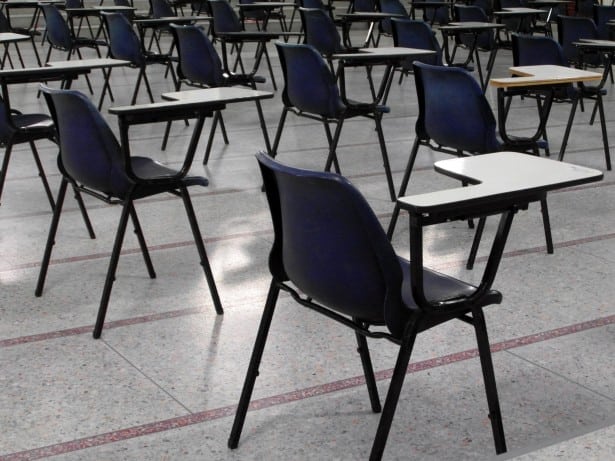
Safe schools are an academic intervention. Massachusetts cannot close achievement gaps with empty desks. It cannot improve literacy when children are missing reading instruction. And it cannot address student mental health while ignoring policies that leave some children wondering whether their families will still be together at the end of the school day.
Immigration policy becomes education policy when it determines whether a parent feels safe taking a child to school. It becomes mental health policy when children spend the school day worried that their parents may be detained. And it becomes an equity issue when those fears create yet another barrier between students and the education they deserve. The consequences do not stop with the child who is absent. Classrooms are interconnected communities. Teachers feel it when a student is missing or too worried to engage. Students feel it when a partner is absent from a group assignment, a teammate is missing from a project, or a classmate’s perspective is missing from the discussion.
Teacher preparation programs and curriculum-based professional development increasingly emphasize collaboration for a reason: students learn with and from one another. Across subjects, teachers design lessons that require students to communicate, problem-solve, and work together. When students are missing, that learning is disrupted. Chronic absenteeism affects everyone, even the students who show up.
Every child should be able to walk through the schoolhouse door thinking about what they will learn that day — not wondering who might be missing from their family when they return home, or whether they will make it home at all.


 September 08, 2026 by Carolina Isabelle Machado